Downtown Phoenix Facts and History
The City of Phoenix Defines the Downtown Area Between 7th Street and 7th Avenue from McDowell to Buckeye Roads
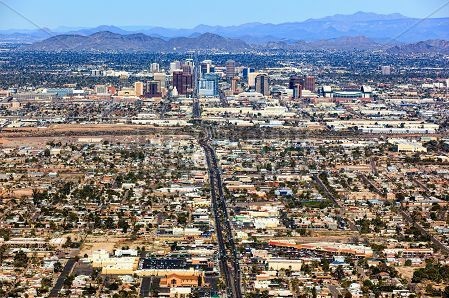 The history of Downtown Phoenix and Central Phoenix history runs deeper than most people realize.
It’s history is rich dating back to 1867. Known as The Valley of the Sun, Downtown is now the 5th largest metropolitan city in the nation.
Where Is Downtown Phoenix, Between the Seven’s or Not?
Historic Downtown and Central Phoenix is generally defined “between the 7’s.” However, the majority of downtown development is concentrated in the smaller area surrounding the intersection of Washington Street and Central Avenue.
Location Perspective for Downtown Phoenix Has a Differencing Opinion
Due to major and recent growth in the nearby Midtown Phoenix, Uptown Phoenix and The Warehouse District neighborhoods, the location perspective on the official downtown boundaries depend on who you ask. Opinions of some define the boundaries from 7th Street on the east, the railroad tracks south of Jackson Street and Interstate 10 on the north.
However, others define it from from 16th Street on the east, to 19th Avenue on the west. Then, from Jackson Street to the south and to McDowell Road at the north. It’s all a matter of perspective as our city continues to massively grow.
Business Districts In Downtown Phoenix
Downtown Phoenix is one of a the few major business districts in the city and is the central business district of the City of Phoenix, Arizona.
Central and Downtown Phoenix Have a Large Mix of Old and New Properties
Located in the heart of the Phoenix metropolitan area or ‘Valley of the Sun,’ there’s a large variety of both many old and new properties. There are also many designated historic Phoenix districts.
 Many are classic, vintage homes combined with newer high rise buildings attracting people from all walks of life.
The new high-rise condos emerging are quickly changing the skyline.
The Top 10 Oldest Downtown Phoenix Historic Districts According to Their History are:
- Coronado Historic District: Established in the early 1900s and mostly built up during the 1920s, this is one of Phoenix’s largest historic districts. It developed as an early “streetcar suburb” of modest working-class homes.
- East Evergreen Historic District: Established in the early 1900s, this central Phoenix historic district is one of the city’s earliest extensions. There is a heavy concentration of Craftsman Style homes, alongside classic Victorian and early Ranch Style homes.
- Encanto-Palmcroft Historic District: This affluent neighborhood began development in the late 1920s. It is known for lush landscaping, wide esplanades, and elaborate Spanish Colonial architecture and Tudor Revival homes.
- F.Q. Story Historic District: Formal development began here in 1920 as a “streetcar suburb” to meet the city’s post-WWI population boom. The architectural diversity consists of Craftsman bungalows, Spanish Colonial Revivals, English Tudors, and Transitional Ranch style homes.
- Garfield Historic District: This is the easternmost historic district adjacent to downtown Phoenix with homes dating back to the late 1800s. It is one of the oldest working-class neighborhoods in the city. It is known for its late 19th-century Victorian Cottage homes and early 20th-century Bungalows.
- Los Olivos Historic District: Platted in 1906 by prominent early Phoenix developer Dwight B. Heard, this neighborhood became one of the city’s first highly prestigious residential addresses. It is famous for its mature landscaping and iconic, namesake olive trees.
- Oakland Historic District: Developed primarily in the 1910s and 1920s, Oakland is closely linked to early territorial Phoenix growth featuring classic bungalows and transitional architectural style homes.
- Roosevelt Historic District: : This neighborhood was one of the first neighborhoods to be designated historic. It was a popular destination for early 20th-century movers and shakers and is filled with California Style and Craftsman Bungalows.
- Willo Historic District: Willo was established in the 1910s. It is one of the most recognizable historic districts, famous for its mature tree-lined streets and mix of Period Revival and Bungalow style homes.
- Windsor Square Historic District: Initial subdivision and platting formally began in 1929. But, its official historic Period of Significance begins in 1912 accounting for the earliest planning and infrastructure.
- Woodland Historic District: Woodland was primarily developed in the late 1800s and early 1900s, making it one of the very first subdivisions in Phoenix. It contains the Eyrich House built in 1885 which is officially recognized as one of the oldest surviving houses in the entire city of Phoenix.
Political and Governmental Buildings
Downtown Phoenix, being the county seat of Maricopa County and the capital of Arizona, serves as the center of politics, justice and government on the local, state and federal levels.
The area is a major center of employment for the region, with many financial, legal, and other national and international corporations housed in a variety of skyscrapers.
Arts, Craft’s and Sports
Major arts and cultural institutions also call the area home. Downtown Phoenix is a center of major league sports activities, live concert events. It’s also an equally prominent center of banking and finance in Arizona.
Banks
Regional headquarters for several major banks, including JP Morgan Chase, Wells Fargo, US Bank, Bank of America, Compass Bank PNC Bank are all located within or close proximity to the area.
The History of Downtown Phoenix: Early Settlement
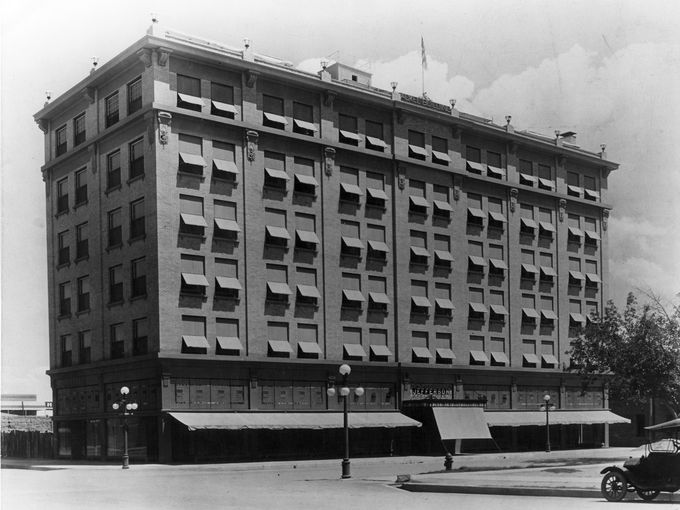 The town of Phoenix was settled in 1867, and incorporated in 1881 as the City of Phoenix.
Territorial Era
In 1870, a meeting was held to select a town site for the influx of pioneers coming to the recently recognized town of Phoenix. 320 acres were purchased for $50 raised by popular subscription.
Between the Seven’s Established Making Downtown Phoenix History
 This original site, the whole of the town of Phoenix in that day, encompasses what would presently be the Downtown Core.
It’s bordered by Van Buren Street south to Jackson Street, and 7th Street to 7th Avenue.
Washington Street
With the first survey of the new town, streets were laid out in a grid, with Washington Street as the main east-west thoroughfare.
Naming of the East and West Streets and Avenues
Originally, the north-south streets originally bore Native American tribal naming. But, they were changed to more easily remembered numbers.
With everything east of Center Street, later named Central Avenue, became named as streets. Everything west became named as avenues.
The town continued to grow, and was eventually incorporated as a city on February 28, 1881 centered around downtown.
Downtown Phoenix Incorporation
Throughout the 1880s the newly incorporated city made many strides toward modernization with the construction of one of the first electric plants in the West as well as the opening of the horse-drawn streetcar line.
The Phoenix Street Railway system was eventually electrified and expanded to several different lines that connected Downtown Phoenix to other neighborhoods and cities in the Valley.
Independence Day of 1887
Independence Day of 1887 heralded the arrival first Southern Pacific train. This opened up the economy of the young city, as goods now flowed in and out by train as opposed to wagon.
As Phoenix became the center of commerce in the territory, the capital was moved to Phoenix with temporary offices being set up in Downtown.
The Beginning of Phoenix’s Story
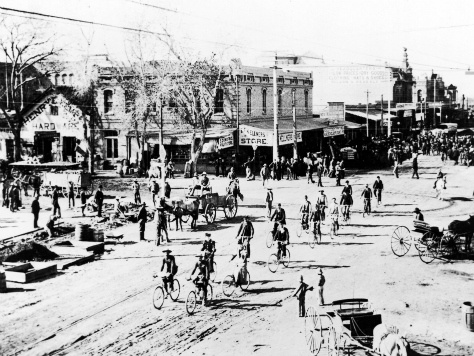
The city of Phoenix’s story begins as people from those pioneer settlements expanded south.
This was in conjunction with the establishment of a military outpost to the east of current day Phoenix.
Phoenix Agriculture
Phoenix served as an agricultural area that depended on large-scale irrigation projects.
Pre-World War II Downtown Phoenix History
Until World War II, the downtown Phoenix economy was based on the “Five C’s”: cotton, citrus and cattle, climate and copper.
The city provided retail, wholesale, banking, and governmental services for central Arizona. It began gaining a national reputation among winter tourists.
Downtown Phoenix Post World War II History
The post-World War II years in downtown Phoenix saw the city beginning to grow more rapidly. Many men who had trained in the military installations in the valley, returned, bringing their families.
Phoenix Population Growth Post War
The Phoenix population growth was further stimulated in the 1950s, in part because of the availability of air conditioning, which made the very hot dry summer heat tolerable.
And, as an influx of industry, led by high tech companies flowed in. The population growth rate of the Phoenix metro area has been nearly 4% per year for the past 40 years.
Growth Rate Slows During the Great Depression
The growth rate slowed during the Great Recession but the U.S. Census Bureau predicted it would resume as the nation’s economy recovered, and it already has begun to do so.
Phoenix is Currently the 5th Most Populous City in the United States
Search For Downtown and Central Phoenix High Rise Luxury Condos, Lofts, Row Homes and Townhomes for Sale
Search Downtown and Central Phoenix Condos and Lofts by Building