Why House Bill 2721 Matters to Historic Phoenix Homes and Their Districts
 HB 2721 Historic Phoenix is already reshaping the historic Phoenix districts, particularly the city’s historic homes and neighborhoods.
Framed as a middle housing solution, the law changes how zoning, redevelopment, and local oversight work in some of Phoenix’s most established areas.
This post explains what HB 2721 means for historic Phoenix homes, how it affects preservation and neighborhood stability, and why its long-term impacts deserve closer attention.
By Laura Boyajian
Laura Boyajian is a Phoenix-based REALTOR® with 21 years of experience specializing in historic homes and neighborhoods. She holds a degree in broadcast journalism from Arizona State University’s Walter Cronkite School of Journalism and Telecommunications and is a former on-air investigative news reporter.
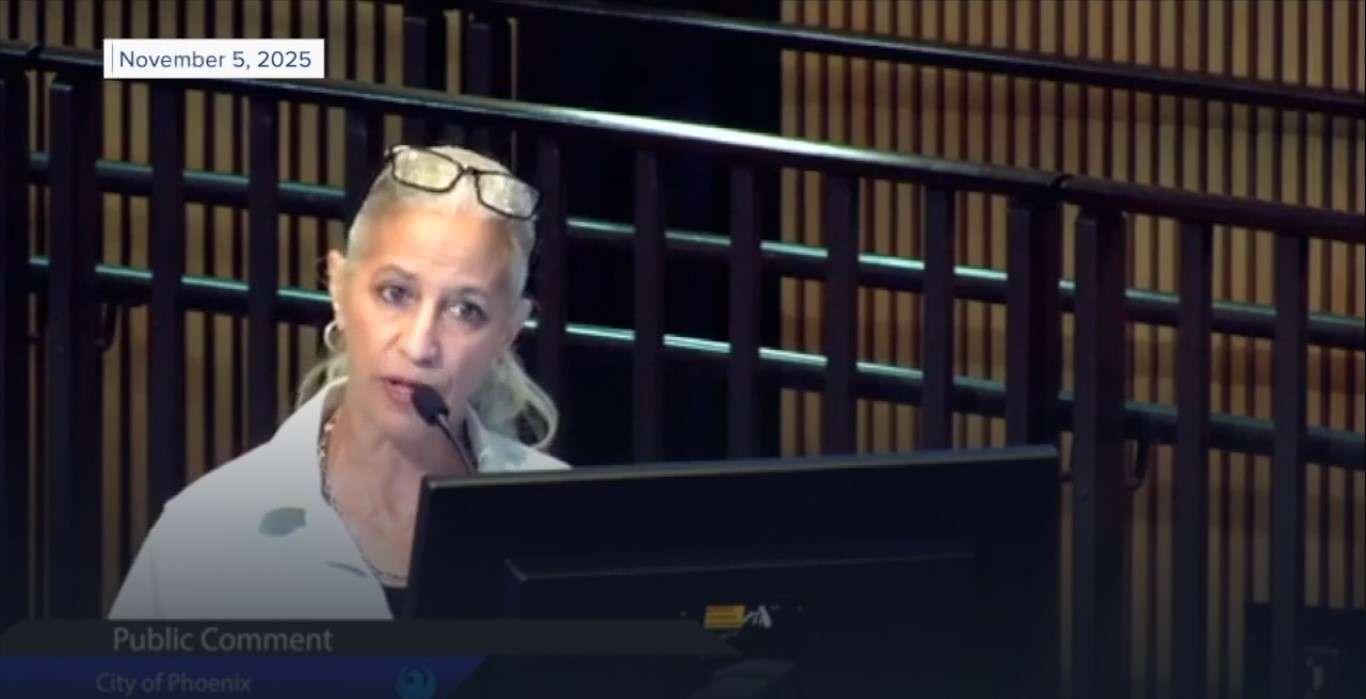
The following is my full public testimony regarding House Bill 2721 and its impact on historic Phoenix homes and neighborhoods:
Good afternoon Mayor Gallego and Members of the City Council. Thank you for the opportunity to speak today.
I’ve also submitted my full written statement for the record.
My name is Laura Boyajian and I’m a REALTOR who specializes in historic homes here in Phoenix. 21 years ago today, ironically, I moved into my 1942 North Encanto Historic District home, and about 5 months later, I became a licensed agent and have been so for 21 years.
98% of my business is historic homes, and my clients move into these homes for their beauty, uniqueness and the peaceful stability that made downtown and Central Phoenix premium land long before developers took notice.
The loopholes in this bill already make it easier to rezone land, and developers will likely push for even more changes to take advantage of it. As the pressure to build grows, our historic districts can and likely will quickly turn into busy mixed-use areas with a very high probability of commercial development, which leads to historic districts becoming a thing of the past.
The Rezoning Consequences of House Bill 2721
This bill makes it much easier to rezone land, and that sets the stage for even more changes. The streamlined processes established by this bill create conditions that make future rezoning requests, including commercial uses, far more likely to succeed. Because the law removes key layers of local oversight and bars stricter design review for middle housing than for single-family homes, it is now much easier for areas built as multi-unit housing to transition toward commercial projects.
Once density increases and local control is reduced, it becomes much easier for developers to pursue commercial or mixed-use zoning. The law up-zones the land but does not protect it from further changes. That is how residential neighborhoods can quietly turn into commercial corridors.
Over time, more mixed-use and commercial projects will move in, turning residential streets into business corridors. The historic character that once drew people to these neighborhoods will fade. As that shift happens, many homeowners will leave, not wanting to live next to new commercial or mixed-use buildings, and that’s how residents get displaced, not by choice, but by the environment changing around them.
Under this law, homeowners who stay are still held to our city’s historic preservation rules. But if a developer buys the property next door, they can bulldoze that home and build a fourplex without having to follow those same historic design standards. That’s not fairness, that is imbalance by design.
While this bill claims to create more housing and reduce rents, what will really happen is the exact opposite. It will trigger a new wave of gentrification in run-down areas and in well-established, already highly valuable neighborhoods.
The redevelopment that will quickly occur as a result of this bill will shift investment and attention toward these historic districts, changing the landscape forever along with the lives of all their residents.
As I mentioned earlier, these neighborhoods draw people in for their character and lasting sense of community. Even though many historic homes are not traditionally affordable, they provide something just as important: stability that will be forever decimated.
These are livable homes that families stay in for decades, and the people who live in them are committed to their neighborhoods, both financially and personally. They preserve the architecture, the culture, and the sense of place that make these districts so desirable and valuable.
But HB 2721 changes that. Under this bill, history will LITERALLY be erased, and residents will be replaced by investor-owned buildings with constant rental turnover. Over time, that shift raises land values, changes who lives there, and pushes out the residents who helped preserve them.
Premium land is exactly what profit-driven developers want, and they do not care about the homeowners. It appears Governor Hobbs does not care about the homeowners either; by signing this bill into law, she has aligned herself with the developers who stand to gain from it.
Let us be clear: this bill will put serious downward pressure on the values of historic homes, while the land beneath them continues to rise in value. That shift benefits developers, not homeowners. When older homes are bulldozed and replaced with large rental buildings, the new rentals will be higher-priced, which pushes nearby landlords to raise their rents too. As land becomes more expensive, property taxes and insurance also rise, and those costs get passed on to tenants.
HB 2721 in Historic Phoenix is presented as a way to create more affordable housing, but in reality, the new units will be priced to attract higher-income renters from outside the area. As a result, rents in and around this one-mile radius will keep increasing instead of going down.
While housing demand in Phoenix is undeniably high, construction is already catching up at a historic pace. Phoenix is one of the largest cities in the nation. The issue is not that we are not building; we are building plenty, and will continue. The problem is how and where that building is happening. This kind of unchecked redevelopment is not smart growth; it is short-sighted policy.
What the Data Shows About Current Construction
Here is what some of the numbers show right now according to various news outlets who follow housing:
According to the Arizona Republic (May 16, 2025), Maricopa County led the nation in new home construction in 2024, adding 38,310 housing units, more than Los Angeles or Houston. The report notes that Phoenix already met its 2030 housing goal five years early.
The 2025 Arizona HousingforAll.com article titled “Rents Becoming More Affordable” explains that a multifamily construction boom has driven vacancy rates higher and rents are cooling after post-pandemic spikes, with renters now receiving move-in deals in most areas.
The GetMultifamily.com Phoenix Market Report (October 7, 2025) shows that record construction is outpacing demand, with 23,000 new units delivered in the past year and another 21,000 under construction. This has led to 12.3% vacancy rates, a 3% drop in asking rents, and widespread rental concessions — often six to eight weeks of free rent. Even luxury and workforce housing are seeing declines.
AZ Big Media (April 16, 2025) reports that Phoenix ranks #1 nationally in build-to-rent housing, with a 309% inventory increase since 2019 and 4,460 single-family rentals added in 2024 alone — more than any other U.S. metro.
Finally, Matthews Real Estate (3rd Quarter 2025 Multifamily Report) confirms that vacancies and rent pressures remain elevated as Phoenix continues to build aggressively, with under-construction units equaling 4.9% of existing inventory, ranking the metro as the sixth most actively built apartment market in the country.
The point is, there is plenty of building going on, and it will continue. We do not need to demolish our amazing historic homes and their districts. Even though there is a housing shortage, there are plenty of places for people to live, with more to come.
After obtaining a degree in Broadcast Journalism from the Walter Cronkite School of Journalism and Telecommunications, I worked as an on-air investigative news reporter.
One of the many things I learned as a reporter over the years is to always follow the money, because that is where the real story usually is.
And that’s exactly what led me to look closer at how this bill came to be and who really stands to profit from it.
Who Financially Benefits from HB 2721?
In early 2024, as lawmakers debated House Bill 2721, it was backed by the state’s biggest developer and builder lobbies, the same ones whose members profit when restrictions on density disappear. Groups like the Home Builders Association of Central Arizona and the Arizona Multihousing Association testified in favor of this bill.
Their members, companies that build and manage thousands of units across Phoenix, stand to gain the most when single-family lots can be up-zoned overnight.
Around that same time, in June 2024, the Arizona Republic and several other news outlets reported that a criminal investigation involving Governor Katie Hobbs administration was opened and remains ongoing. The Arizona Capitol Times also noted transparency gaps under state law, deepening public concern about how closely state leadership may be aligned with the same industry groups that benefit most from legislation like HB 2721.
What Will Historic Districts Look Like in the Near Future?
Imagine, for a minute, what our historic districts will look like in the near future. Within the first year after this law takes effect, investors start buying any home they can. Homeowners grow uneasy as speculative offers rise, and historic home values begin to drop.
Soon after, demolitions begin. New two-story fourplexes start appearing where historic homes once stood, bringing construction noise, dust, and parking strain.
By the third year, redevelopment spreads fast. Blocks lose their visual rhythm and charm, and long-time residents start selling because they no longer want to live amid the constant change.
Within five to ten years, streets become uneven mosaics of mismatched buildings and lost character.
What were once some of the most cherished neighborhoods in Phoenix will be unrecognizable.
The Forced Compliance Clause and Loss of Local Control
Before I close, I want to remind everyone that this law includes what is essentially a forced compliance clause, the kind of hidden mechanism and loophole most people do not even realize is built into this bill.
This clause says that if Phoenix does not pass its own ordinance by January 1, 2026, middle housing automatically becomes allowed on all single family lots with no restrictions or protections at all. That is not speculation, it is written in Section 9 462.10(A) of the bill.
Legislators openly said they added this provision to make sure cities could not delay or resist the State’s mandate.
As confirmed in the City of Phoenix August 11 staff presentation, ‘Penalty Clause’: If a municipality does not adopt the required ordinances by January 1, 2026, middle housing shall be allowed on all lots zoned for single family residential use without any limitations.
Mayor Gallego, Members of the City Council, will you stand up for us, or side with the same forces that benefit from this bill? Thank you.
Full article quotes & references:
Arizona Republic, May 16, 2025
“The most new homes in the U.S. were built in this Arizona county in 2024.
If you have noticed new homes and apartments popping up around the Valley at an unusual rate, you are not alone. Maricopa County led the nation in new housing built in 2024, according to Census data released on May 15, 2025. The County added 38,310 housing units last year, surpassing even Los Angeles and Houston.
The surge reflects Arizona’s push to combat a housing shortage, with Phoenix already meeting its 2030 housing goal five years early.”
Arizona HousingforAll.com, 2025 article titled “Rents Becoming More Affordable”
“The multifamily construction boom is helping to alleviate high housing shortages caused in part by Arizona having some of the highest population growth in the U.S.
Vacancy rates have risen quickly over the past few years and rents are broadly cooling, after post-pandemic cost spikes. Renters are now able to expect generous move-in deals in most areas.”
GetMultifamily.com, Oct. 7, 2025, Phoenix Multifamily Market Report
“The Phoenix apartment market continues to face an imbalance between supply and demand. Despite solid leasing activity, 17,000 units absorbed in the past year, more than double the pre-COVID average. Record construction levels are keeping vacancy rates high (12.3%) and rent growth negative.
Over the past 12 months, 23,000 new units were delivered, roughly triple the typical annual volume from 2015-2019, with another 21,000 units under construction. This surge places Phoenix among the six most active apartment construction markets in the U.S., particularly in Downtown Phoenix, Tempe, and the Southwest Valley, where empty units are accumulating.
The excess supply has intensified competition, leading to a 3% drop in asking rents and widespread rental concessions, often offering six to eight weeks of free rent. Rent declines now affect both luxury (4-and 5-Star) and workforce (1-and 2-Star) properties alike.
High-growth areas such as Downtown Phoenix, Tempe, and the Southwest Valley are seeing the highest number of empty units due to heavy construction activity. Looking ahead, construction starts are slowing, which could ease supply pressures by 2026. However, with a large backlog of new inventory, vacancies and rent softness are expected to persist through 2025, with a gradual recovery anticipated in 2026.”
AZ Big Media, April 16, 2025
“Phoenix ranks No. 1 nationally for both the most build-to-rent units delivered in 2024 and the most units delivered over the past five years, according to the latest Point2Homes Build-to-Rent report.
That marks an impressive 309% build-to-rent inventory increase for Phoenix compared to 2019. Phoenix added 4,460 new single-family rentals in 2024, the highest total of any metro. Phoenix also holds the record for most BTR units delivered since 2020, a total of 12,702.”
Matthews.com, 3rd quarter 2025, Phoenix, AZ Multifamily Market Report
“Phoenix’s multifamily market faced rent and vacancy pressures in Q3 2025, as the metro navigates a historic wave of construction keeping supply ahead of demand.
Absorption over the past year was more than double the pre-pandemic average. However, this picture of resilient demand in the metro is being overshadowed by a multi-decade high wave of construction, keeping vacancies elevated and rent growth negative.
Phoenix’s share of under-construction units, representing 4.9% of existing inventory, ranks the metro as the nation’s sixth most aggressively built apartment market.”
Laura Boyajian is a Phoenix-based REALTOR® specializing in historic homes and neighborhoods. She can be contacted on her cell phone at (62) 400-0008.
 Buying a historic home in Phoenix is exciting, but let’s be real, there is a lot to consider beneath the surface charm. This guide will give you a solid and helpful starting point, not an exhaustive manual.



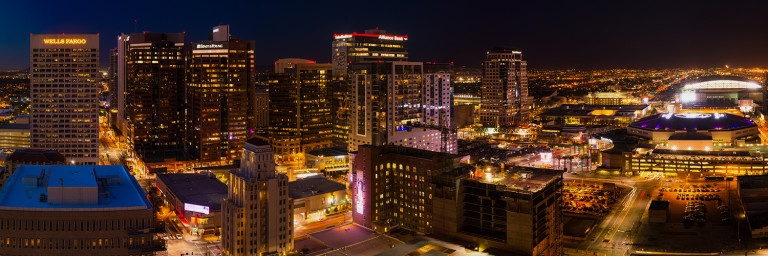
 Roosevelt Historic District Benefits from Roosevelt Row in Downtown Phoenix, AZ as it Continues to Boom